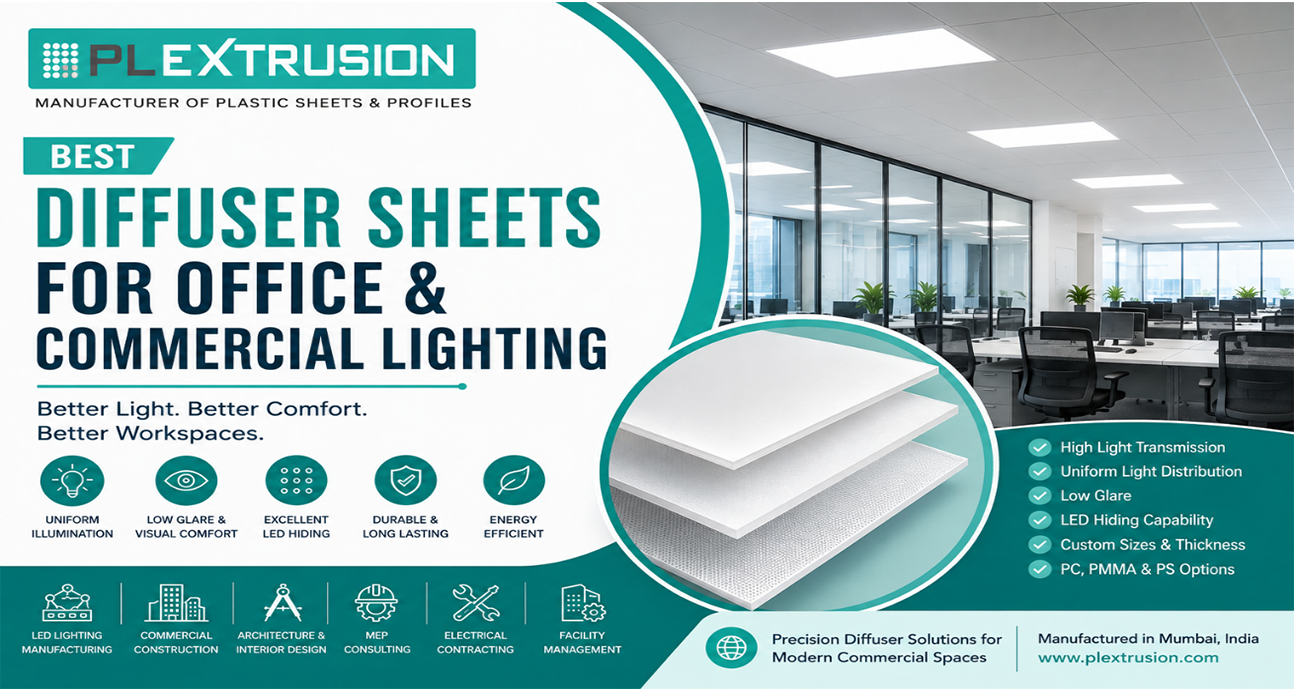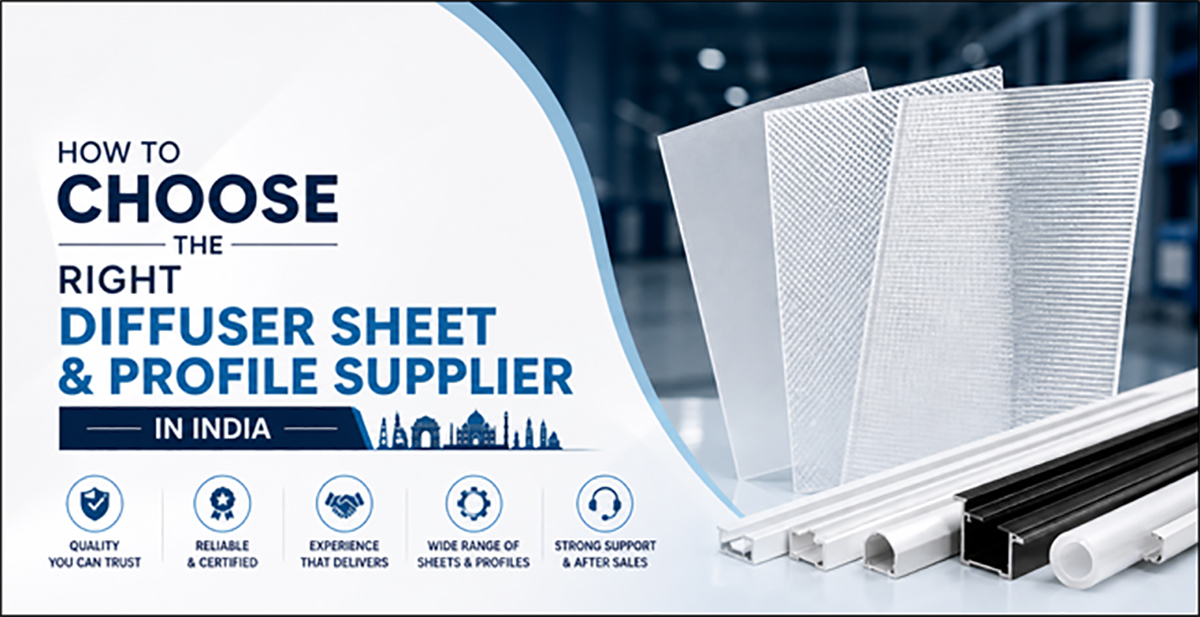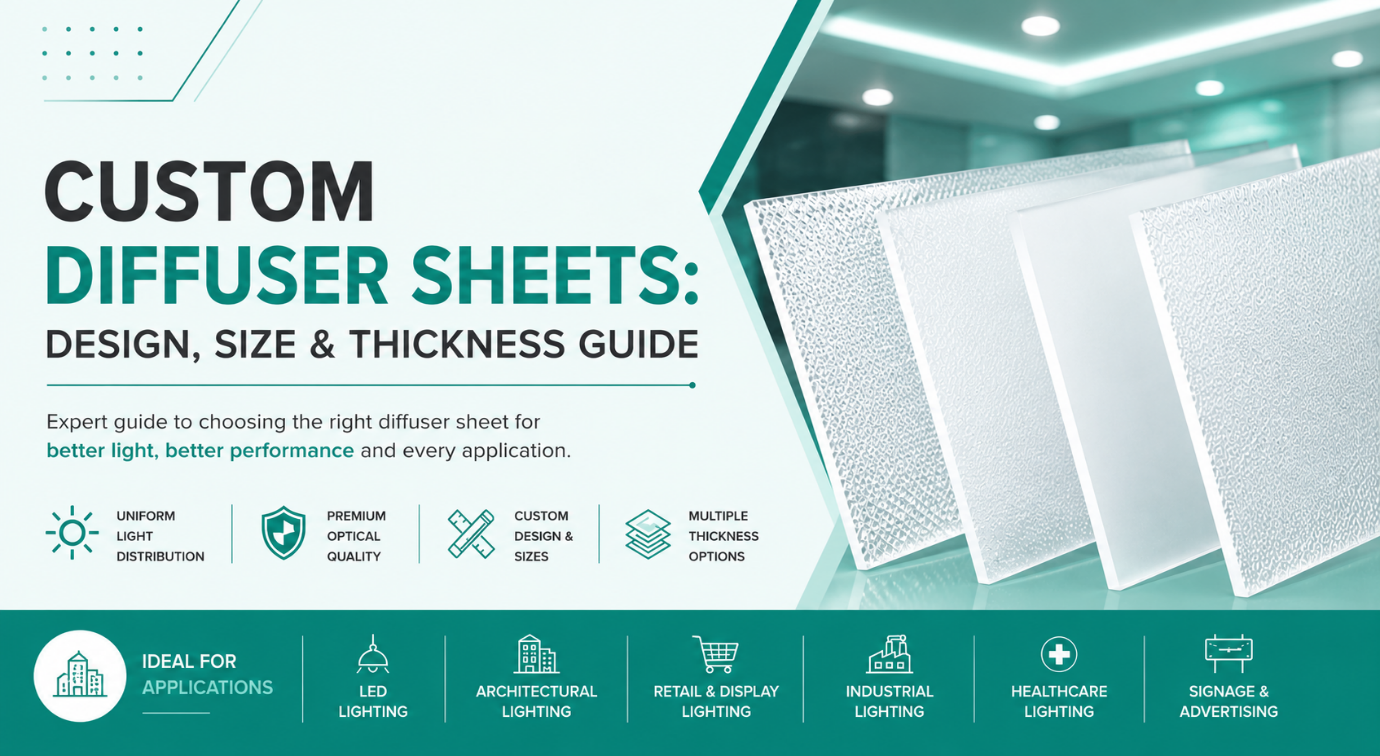
A custom diffuser sheet should be selected based on the lighting application, required light transmission, diffuser material, sheet thickness, size requirements, and environmental conditions. The right diffuser sheet improves light uniformity, reduces glare, removes LED hotspots, and increases the overall performance and appearance of lighting systems.
A custom diffuser sheet is a specially engineered plastic sheet designed to spread and soften light release from LEDs or other light sources. These sheets help create uniform illumination while minimizing glare and visible LED points.
Diffuser sheets are commonly manufactured using:The material, thickness, texture, and optical properties can be customized according to application requirements.
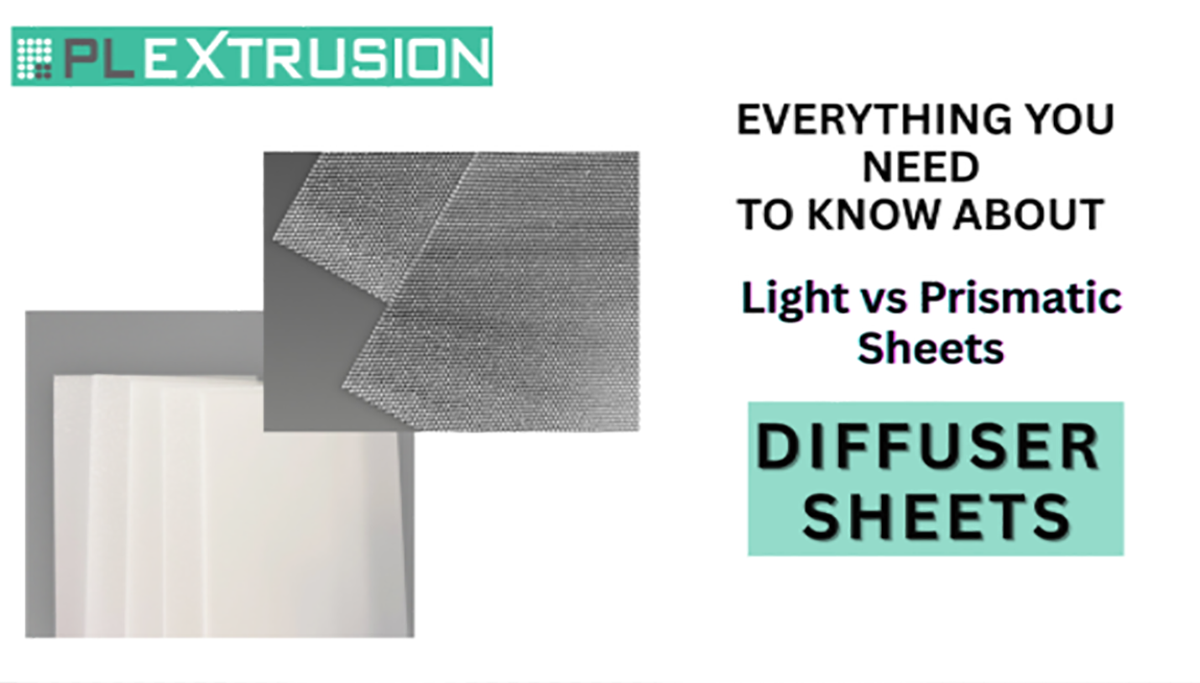
Definition:A diffuser sheet is a clear plastic sheet that spreads light evenly so it looks softer, reduces glare, and makes lighting more comfortable and efficient.
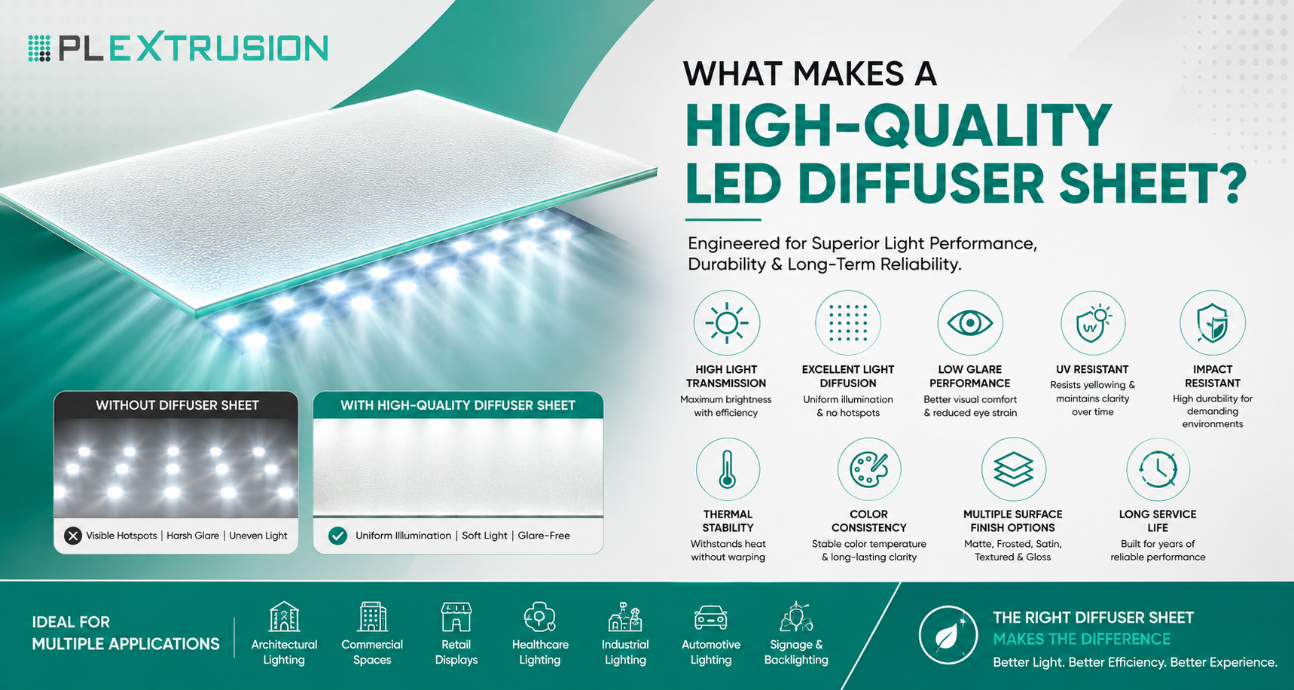
Modern LED lighting systems produce highly concentrated light. Without diffusion, users may experience:
Custom diffuser sheets solve these challenges by creating a balanced and professional lighting output.
Key Benefits:Custom diffuser sheets are widely used across multiple industries.
| Industry | Application |
|---|---|
| Lighting & Electrical | LED panel lights, battens, troffers |
| Architecture & Interior Design | Decorative ceilings, wall lighting |
| Retail & Commercial Spaces | Display shelves, showrooms |
| Automotive | Interior ambient lighting |
| Electronics & Appliances | Display panels, control interfaces |
| Healthcare & Cleanrooms | Sterile lighting systems |
| Industrial & Warehousing | High-bay and task lighting |
| Signage & Advertising | Illuminated signboards |
| Hospitality | Hotels, restaurants, reception areas |
| Smart Lighting & IoT | Connected lighting solutions |
The effectiveness of a diffuser sheet depends on several design variables.
1. Surface FinishAvailable finishes include:
Each finish produces a different diffusion pattern.
2. Light TransmissionHigher transmission means more brightness.
| Light Transmission | Application |
|---|---|
| 60% – 70% | Maximum diffusion |
| 70% – 80% | General lighting |
| 80% – 90% | High brightness applications |
Conclusion: Higher light transmission increases brightness, while stronger diffusion improves light consistency.
Custom diffuser sheets can be manufactured and cut according to project specifications.
Standard Sheet Sizes:Manufacturers often provide:
Conclusion: Cut-to-size diffuser sheets reduce installation time and material wastage.
Thickness directly affects diffusion performance, hardness, and strength.
Recommended Thickness Guide:| Thickness | Typical Applications |
|---|---|
| 0.8 mm | Slim LED fixtures |
| 1.0 mm | Display lighting |
| 1.2 mm | LED panels |
| 1.5 mm | Commercial lighting |
| 2.0 mm | Industrial lighting |
| 3.0 mm – 4.0 mm | Heavy-duty applications |
According to product specifications offered by Plextrusion India LLP, Polycarbonate Diffuser Sheets are available in thicknesses ranging from 0.8 mm to 4.0 mm, depending on application requirements.
Conclusion: Thicker diffuser sheets generally provide greater strength, while thinner sheets offer higher design flexibility.
Features:
Applications:
Polycarbonate (PC) diffuser sheets offer light transmission between 70% and 80% and thickness options from 0.8 mm to 4.0 mm.
2. Acrylic (PMMA) Diffuser SheetsFeatures:
Applications:
PMMA diffuser sheets offer light transmission levels of approximately 75–80%.
3. Polystyrene (PS) Diffuser SheetsFeatures:
Applications:
Advanced diffusion technology enables manufacturers to achieve:
Conclusion: The quality of light diffusion is determined not only by material selection but also by the diffuser's optical engineering.
Plextrusion India LLP is a Mumbai-based manufacturer specializing in diffuser sheets and diffuser profiles for the LED lighting and signage industries.
Company Highlights:This framework helps engineers and lighting designers choose the most suitable diffuser solution for long-term performance.
Emerging trends include:
Industry demand is increasingly shifting toward customized optical performance rather than standard diffuser products.
Custom diffuser sheets play a critical role in modern lighting design by improving light quality, visual comfort, and fixture attractiveness. The ideal diffuser sheet depends on the application's design requirements, material selection, sheet size, optical performance, and thickness specifications. For businesses looking customized lighting solutions, partnering with an experienced manufacturer such as Plextrusion India LLP ensures access to tailored diffuser technologies that meet growing industry requirements while delivering consistent performance and safety.
For most LED panel applications, thicknesses between 1.0 mm and 1.5 mm are commonly used.
PMMA (Acrylic) diffuser sheets generally provide the highest optical clarity and excellent light transmission.
Yes. Modern manufacturers offer laser-cut and custom-shaped diffuser sheets based on project drawings.
Polycarbonate diffuser sheets are commonly preferred for outdoor applications because of their impact resistance and strength.
Yes. Properly engineered diffuser sheets significantly reduce visible LED hotspots and improve light uniformity.
Lighting, signage, architecture, automotive, retail, healthcare, hospitality, electronics, and industrial sectors all benefit from custom diffuser sheet solutions.